Same Room - How Interior Style Changes a Space

A visual study exploring how one identical room can take on completely different identities through interior design. Six distinct styles transform the same architecture through furniture, materials, color, texture and decoration - while the room itself remains unchanged.
[Theme]
Interior Style Transformation
[FOCUS]
Interior Design · Visual Transformation · AI Visual Development
[CATEGORY]
Creative Direction · AI Visual Development · Interior Design
Snaps From the Project


SAME ROOM. DIFFERENT WORLD.
The architecture never changes.
The windows, walls, floor, proportions and natural light remain exactly the same. Only the interior design changes.
For this visual study, we transformed one empty room into six completely different environments. Furniture, materials, color, texture and decorative details become the storytelling tools.
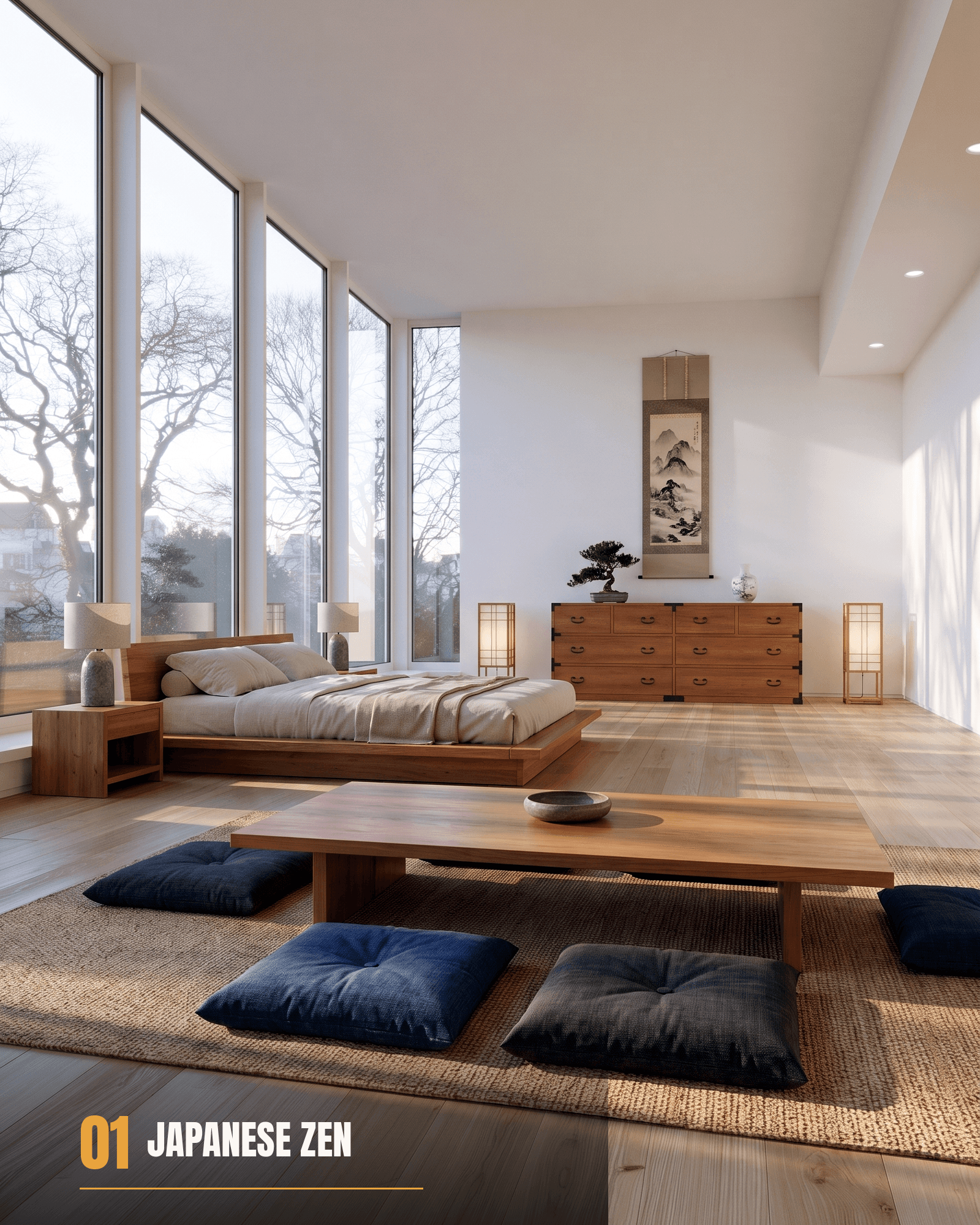
01 — JAPANESE ZEN
Natural wood, low furniture and a restrained material palette create a calm and contemplative atmosphere. The room feels open, balanced and intentional, with every object given space to breathe.
02 — BAUHAUS
Functional forms, tubular steel, geometric structures and carefully placed primary colors transform the room into a disciplined modernist composition. Decoration gives way to clarity, proportion and purpose.
03 — WABI-SABI
Raw wood, handmade ceramics, natural fibers and imperfect surfaces introduce warmth and quiet character. Instead of polished perfection, the space celebrates age, texture and the beauty of irregularity.
04 — SCANDINAVIAN
Soft neutrals, pale woods, tactile fabrics and simple furniture create a bright and comfortable interior. The result feels understated, functional and warm without becoming visually heavy.
05 — POSTMODERN MEMPHIS
Bold geometry, playful patterns and saturated colors completely change the character of the room. Furniture becomes graphic sculpture and the interior shifts from restrained architecture to expressive visual composition.
06 — BOHO
Layered textiles, plants, woven materials, warm woods and handcrafted objects create a relaxed and eclectic environment. The space feels collected rather than designed — personal, textured and full of life.
The experiment shows how strongly interior design influences our perception of architecture.
The room itself never changed.
Its dimensions stayed the same.
Its windows stayed the same.
Its light stayed the same.
Yet each version feels like a completely different place.
Same room. Different objects. Different story.


